


Keiths farm visit

To:
On the 20th of October, my fellow classmates and I assisted in a talk that featured Avril Allshire from Caherbeg free range pork and Rosscarberry Recipes. The intention of this talk was to give students a background into Avril as a food producer. She also mentioned some of the more prestigious awards she had won, such as UK Great taste award, the French awards Prix d’Honneur and Irelands Blas na hEireann
Avrils company Chaerbeg free range pork is a family run business that includes her husband and two sons. Avril maintains that her relaxed farming method helps to produce a quality finished product.
One of Avrils most interesting recipes was her black pudding and beamish stout bread that has 7 ingredients, 5 of which are made using ingredients solely produced in Cork.
Avril and her family have won many prestigious awards nationally and internationally for their hard work in producing quality products. Most notable of these is la Confreirie des chevaliers du Goute-boudin which she received as a result of the dedication and hard work that went into producing her black pudding This pudding also features in her Rosscrbary black pudding lasagne recipe. Caherbegs products have won awards almost every year from 2003 to 2013. Some of these awards includes the UK Great taste award, the French awards Prix d’Honneur and Irelands Blas na hEireann. Caherbegs pork products are also noted by the Irish examiner as “lovely full meaty flavou”
According to her husband Willie Rosscarbery recipes allocates to about 85% of their business but maintains that their original farm has to remain small in order to keep their standards high For her second company Rosscarbery recipes Avril is supplied by stautons in Cork. Statuons was founded by the staton family who had been butchering pigs for local farmers. Since 1950. Because of statuons quality control and locally employed workforce it is easy to see why Avril who is fixed on promoting good quality and local business would choose stautons as her supplier for Rosscarbery recipes. Avril mentioned that her inspiration for most of her recipes doesn’t come from her experience of cooking professionally but rather from being a mother who is sometimes in need of a quick recipe
Caherbeg free range pork and rosscarbarry recipes is an inspiration to how food should be produced. Small sustainable and local produce far outweighs anything that could be produced by larger manufactures in quality, nutrition and taste. Proof of this can be seen by the awards and recognition gained by Avril and her family over the years.
Chefs & unions

Kitchens and unions
The following piece is my view and opinion on the matter of unions in the workplace, and why they don’t really work in the kitchen. With all this talk over pay, conditions, overtime and rosters, I feel that unions are pushing for more until they get what they want and then want more.
Now I am in agreement with nurses and Gardai not so much they rest of the people going on strike. The dispute for Gardai is about restoration of previous entitlements and pay, give it to them, they take care of us we should look after them. ( As much as we give out about them we need them) Same as nurses and midwives pay them what they deserve for the hours of hard work and years of training that has to be done to them into hospitals working.
The kitchen in my view is run like the army everyone has their job to do and when to do it, stepping away from this without seeking permission from a higher ranked officer or chef is frowned upon with almost contempt.
In the last year I’ve list track of the amount of times I heard about traffic disruption around Dublin due to a strike action, quite frankly I would love to see Mucheal o Leary take over there and see what happens, when he took over in Ryanair it was losing money hand over fist now it’s one of, if not the biggest profit making airlines in Europe.
In the kitchen conditions are the same everywhere hot, due to ovens grills salamanders or a 6 ring burner. You deal with sharp knives (should be sharp) all day, standing all day under pressure all day to get all prep and service ready by that 1pm lunch rush or that 6pm deadline when every body else is off work. Most places that are unionised get paid extra for anti social hours, i.e weekends, bank holidays. Thank God it’s Monday. For us in the kitchen to get pay raise or better conditions you must earn the raise by doing the job of your superior for me it’s the job of sous chef though I’m not ready for it I’m pushing myself to get there, by being better than the day before trying to put up clean plates that look identical to the one that left before it, controlling a service and not getting flustered in the middle of a rush. Putting ideas forward for menu items learning more everyday. Trying to develop communication skills, experience and knowledge of different dishes and food, and the list goes on. For conditions well if you can’t stand the heat get out of the kitchen really sums it up.
As for chefs on strike well I’ve only here if one but that was years ago long before my time when brigades were bigger and more complex now that worked with no union only a brigade uniting under their senior chef to get what they wanted, now with smaller crews it’s not so easy and with chefs being more networked now anyone who does this is tarnished by doing so, and as a result may never work in a kitchen again.
Now in all that I fail to see what a union rep can do for anyone here, now I am open to correction here.
Follow on
Twitter @chefpaulc
Instagram @chefpaulc for more pictures of work and foraging
Artwork huge thanks to Jenny @wattonarts on Instagram
Sid on IBS

Irritable bowel Syndrome (IBS)
What is it?
It is important to remember that IBS is not actually a disease but rather a collection of symptoms which are due to impaired function of the gut. We all experience occasional abdominal discomfort or upset from time to time but for IBS sufferers, these symptoms can be prolonged and problematic. This common disorder affects your large intestine (colon) and in Ireland, up to 20% of adults suffer from the condition, with twice as many females to males living with it.
IBS commonly causes abdominal pain, cramping, bloating and alternating constipation and diarrhoea. These symptoms can occur for days, weeks, months or even years. As the symptoms mimic other bowel conditions, IBS is usually diagnosed through the elimination of other ailments with similar symptoms.
What causes it?
There are many proposed causes of IBS. The list of suspects includes:
Bacterial, parasitic or viral infections
Overuse of antibiotics
An adverse reaction or intolerance to a food such as lactose or wheat
One underlying factor in almost all cases of IBS is stress. There is a complex biological interaction between the brain and the gut. No matter the source or level of the stress, our gut will generally react in some way.
What can I do to manage my IBS?
In many cases, you can control your IBS by managing your diet, lifestyle and stress.
Here are a few simple tips to get started:
Identify certain trigger foods that aggravate your symptoms, remove these foods by process of elimination. This can take several weeks but if you can find the offending food then it’s well worth the effort.
Probiotics are cultures of the “Friendly Bacteria” vital for intestinal health, which help to digest food and protect against the growth of harmful bacteria.
Soluble fibre (which dissolves in water) is much better for helping IBS than insoluble fibre. Soluble fibre has a gentle and soothing action on the gut. Dietary sources include:
Oats
Psyllium husk soaked in in water or psyllium powder
Flaxseed (linseed) – whole rather than ground
Peppermint oil capsules – very effective in calming abdominal spasms
Baking tips

When boiling milk, first stir in a pinch of baking soda. This will help keep the milk from curdling
When a recipe calls for butter the size of an egg, use four tablespoons
After crimping the edge of the pie crust, lift the edge of the crust gently all around with your fingers. This keeps the dough from sticking to the dish while baking and makes it easier to take out the pieces of pie
A teaspoon of sugar mixed with your yeast and water makes it raise better. Even if you are making bread you can use some sugar
Keep brown sugar in a closed container with an apple in it, the brown sugar will stay soft and moist
Cookie & Cake Decoration: Keep a small amount of sugar in small glass jars, add a few drops of food coloring and shake jar. Keep several colors on hand
Never mix salt directly with the yeast and water mixture as the salt kills the raising action
Grate orange and lemon peel before peeling. Dry and add to spice cake or any cookies or puddings. The dried grated peel will keep well in a covered jar
Dip the blades of shears in hot water before cutting marshmallows, they won’t stick
A tablespoon of minute tapioca sprinkled in apple pie will absorb excess juice while baking
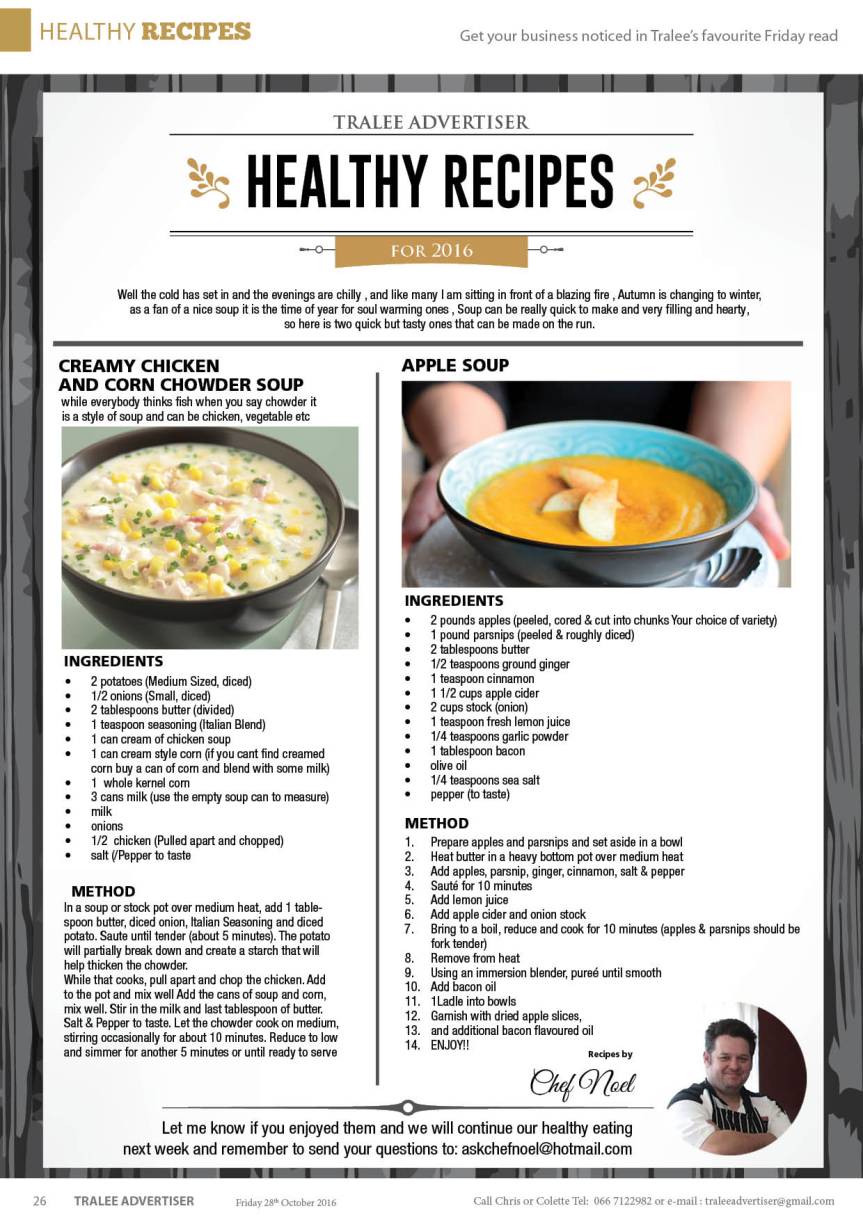
Seasonal soups
Sid on gluten
Gluten – why so many of us react to it?
Gluten has become one of the major dietary components that so many of us have an adverse reaction to. In the last 40-50 years the incidence of coeliac disease and other gluten related illnesses has skyrocketed. This is most likely due to how our grains are grown and genetically modified. Through modifying and hybridising these plants, they have become easier and faster to grow, resistant to harsh environments and ultimately more profitable to produce.
Gluten is a protein found in wheat, spelt, oats, rye, barley and products made from them. Gluten sensitivity causes inflammation of the gut, eventually leading to intestinal permeability or ‘leaky gut’. This can trigger allergies, sensitivities and inflammation in the body. The lining of the small intestine contains millions of tiny hair like projections called villi which absorb our nutrients from our food. Coeliac disease is a condition, where gluten causes an autoimmune reaction in which the immune system mistakenly attacks itself. This results in the lining of the small intestine becoming damaged, thereby reducing the person’s ability to absorb nutrients from food. The process may damage other areas of the body also and increase the risk for diseases like bone disease, anaemia and intestinal disorders. Symptoms of gluten sensitivity can include:
Diarrhoea Constipation Weight Loss Chronic Tiredness Anaemia Indigestion Depression Infertility Mouth Ulcers Abdominal Cramps Vomiting IBS
Research studies cited in many medical journals have linked Gluten Sensitivity to behavioural and developmental disorders in children such as Autism, ADHD, and Asperger’s Syndrome
By Richard Sheehan Nutritional Therapist Dip NT mIANT
web http://www.nourishbynature.ie
email nourishbynaturelistowel@gmail.com
mobile 087 3848818
Foraging sea greens
Sea greens
|
|
|
|
|
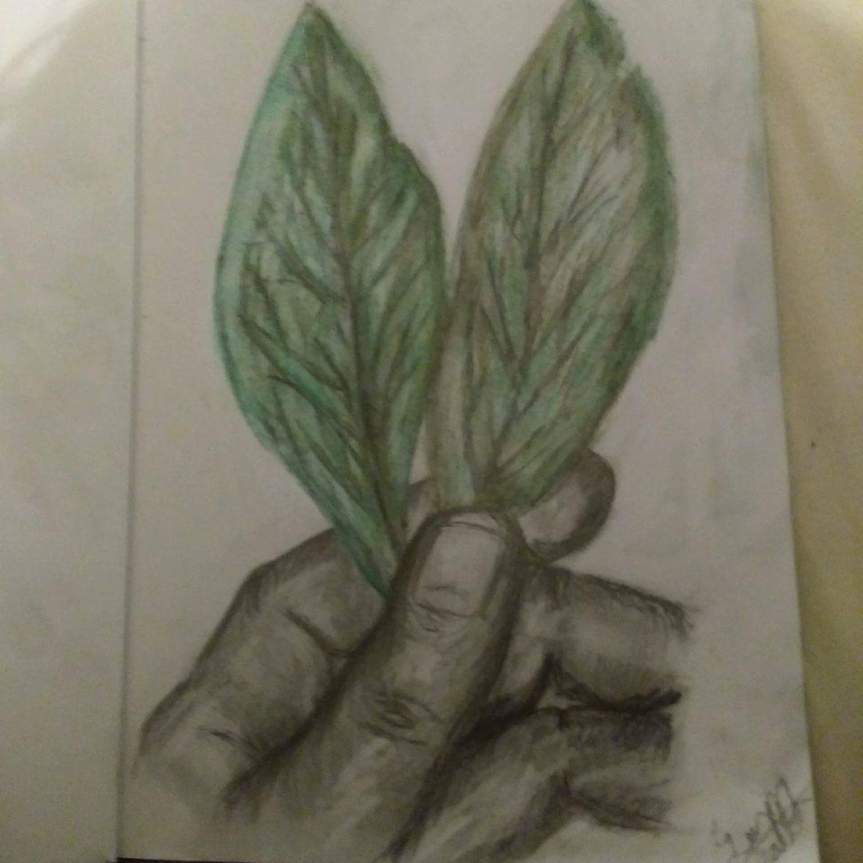
Sea greens
Now that the winter is well on its way most of my summer greens have gone to sleep until late spring so I now have new greens in natures vegetable stores.
The hardier of the sea vegetables are coming out to grace our plates. One of these is back for the second time this year all be it in a different form instead of growing up it grows out to resemble a young cabbage patch without the slugs and snails. Scurvy grass is now carpeting an area that was once covered in samphire and sea grass
Oyster leaf is coming to the end with the last few leaves withering away another variety of samphire takes its place
All of these greens are rich in natural salts minerals and vitamins which are lacking in the majority of peoples diets today.
You can pay for supplements and get more chemically engineered minerals or you can take a drive or a walk if close enough to the nearest beach there is always something to be picked and it’s free just add to a pan with a small bit of butter and gently wilt it or add to white sauce to add a natural saltiness or even mix it through with some salad leaves dress with lemon juice and cracked black pepper.
An added bonus to these greens for the health conscious amongst us there is no added insecticide, pesticides or weed killers no growth hormones, all natural and basically calorie free they really are (sorry Sid) nourish by nature.
Follow my adventures on Instagram @chefpaulc for what to look for and eat on our coastline pantry thanks also to my fiancée jenny for the artwork follow on Instagram @wattonarts
Sid on food intolerance
COULD YOU HAVE A FOOD INTOLERANCE?
What is a food intolerance?
A food intolerance is quite simply an unpleasant reaction to a food. It is our body’s natural defence mechanism telling us that this particular food does not agree with us. The immune system, which protects us produces anti-bodies that deal with anything which invades the body. Sometimes these antibodies not only destroy the invader but also destroy some of the bodies tissues. This over sensitive immune system causes inflammation, discomfort and pain associated with irritable bowel syndrome (IBS), eczema and arthritis amongst many other inflammatory conditions. Over time, if we continue to consume these offending foods on a regular basis the result is a lifetime of chronic inflammation. By correctly identifying and removing these problem foods, there is very often a significant improvement to health.
Allergy v Intolerance
Both of these terms are very often used in the same context, but it is important that you understand the difference between the two. Both are reactions to a food but it is the type of reaction that is important.
Food allergy
This reaction occurs almost immediately after consuming the offending food, usually within the first hour. The reaction is often very obvious and quite violent. Common symptoms are itchy skin, rash, swollen lips and tongue, vomiting and/or diarrhoea. In more severe cases, you may not even have to consume the food but just be in contact with it. Difficulty breathing can also be experienced in extreme cases. Immediate medical attention is required. Only about 2% of the Irish population actually suffer from a food allergy.
Food intolerance
This type of reaction affects a far greater number of us every day. A food intolerance can develop at any time of life whereas a food allergy most often develops in early childhood. The reaction rarely occurs immediately after consuming the food, in fact it can take up to 48hrs before any symptoms will be felt. Many chronic conditions may be associated with an intolerance to a particular food, here are just a few of the more common offenders and how they may affect you.
Dairy: Some of the reactions to dairy (particularly cow dairy) include digestive distress, asthma, skin conditions and sinus problems.
Wheat: This major offender may be linked to headaches, bloating, diarrhoea/constipation, fatigue and brain fog.
Gluten: If allergic to gluten, it causes coeliac disease. An intolerance to gluten may be linked to malabsorption of nutrients (leading to a whole host of illnesses), IBS, behavioural issues in children and depression.
By Richard Sheehan Nutritional Therapist Dip NT mIANT
web http://www.nourishbynature.ie
email nourishbynaturelistowel@gmail.com
mobile 087 3848818
All about apple salads


